MRI Scan Results Time: How Long Private MRI Reports Take
Quick Answer
MRI scan results time is often much faster in private care than many patients expect. With a private provider like MRI Plus, the scan images are typically reviewed and reported digitally, so results can be shared quickly with you, your GP, consultant, or specialist rather than left waiting for a long NHS reporting queue.
MRI scan results time matters because the scan itself is only part of the journey. For many patients, the real worry starts after the appointment, especially when pain, neurological symptoms, injury, or abdominal concerns are still unresolved. In private care, MRI scan results time is often shorter because images are reported digitally and shared without the delays many patients experience elsewhere. That faster turnaround can make a real difference when you need answers for a GP, consultant, physiotherapist, or specialist. If you are comparing pathways, our private MRI scan guide explains what to expect before, during, and after your appointment. This article focuses on the part patients ask about most: how long reporting takes, who reviews it, what happens if something concerning appears, and how digital delivery helps move care forward.
How Long Do MRI Results Usually Take?
MRI scan results time depends on the provider, the complexity of the scan, and how quickly the report is prioritised. In private imaging, patients often receive their report far sooner than they would in a slower pathway, because the images are reviewed by a radiologist and sent digitally once the report is complete. That is why MRI scan results time is one of the biggest reasons people choose private scanning when they want clarity quickly.
The scan appointment itself is not the same as the reporting time. Many people expect the result to appear immediately after the machine stops, but MRI images need expert review. The radiologist looks for patterns, compares slices, and writes a formal report. If your scan is straightforward, the process may move quickly. If it is more complex, the interpretation may take longer because careful reporting matters more than speed.
For context on scan pathways and waiting, the NHS notes that timing varies by local service and urgency on its MRI Scan Information Page. Meanwhile, articles such as When To Worry About MRI Results: Timeframes and What Happens Next explain why reporting timelines can differ across providers.
If you are specifically looking for faster access in London, it can help to choose a service that offers digital reporting from the start. That is one reason MRI scan results time is often shorter with MRI Plus. You get a clearer route from scan to report, and then from report to next steps.

What is MRI scan results time?
MRI scan results time is the period between your scan and receiving the formal radiology report. It is not the scan duration itself. It covers image review, written interpretation, and digital delivery to the right person.
Private MRI Results vs NHS Results Timelines
Private MRI results timelines are usually more direct because the reporting pathway is built around fast turnaround. That does not mean every private report is instant, but it does mean MRI scan results time is often shorter and easier to track. In NHS care, timing can depend on local demand, clinical urgency, and the service handling the scan.
For many patients, that difference matters. If you are waiting to understand unexplained pain, a head injury, spinal symptoms, or suspected abdominal issues, a shorter MRI scan results time can reduce uncertainty and help your clinician act sooner. It can also save time when a physio, neurologist, gastroenterologist, or GP needs the report before deciding on the next step.
You can also review our related guides on MRI scan near me and MRI scan UK pathways if you want to understand how private access fits into the wider process.
The key point is simple. Private MRI does not remove the need for expert review, but it often removes avoidable delays. Therefore, MRI scan results time is usually easier to plan around, which helps patients move from uncertainty to action more quickly.
Why do private reports often arrive sooner?
Private services often use streamlined digital workflows. Images move from scanner to radiologist, then to a digital report. That reduces handovers and makes MRI scan results time more predictable.
Who Reviews and Reports the Scan?
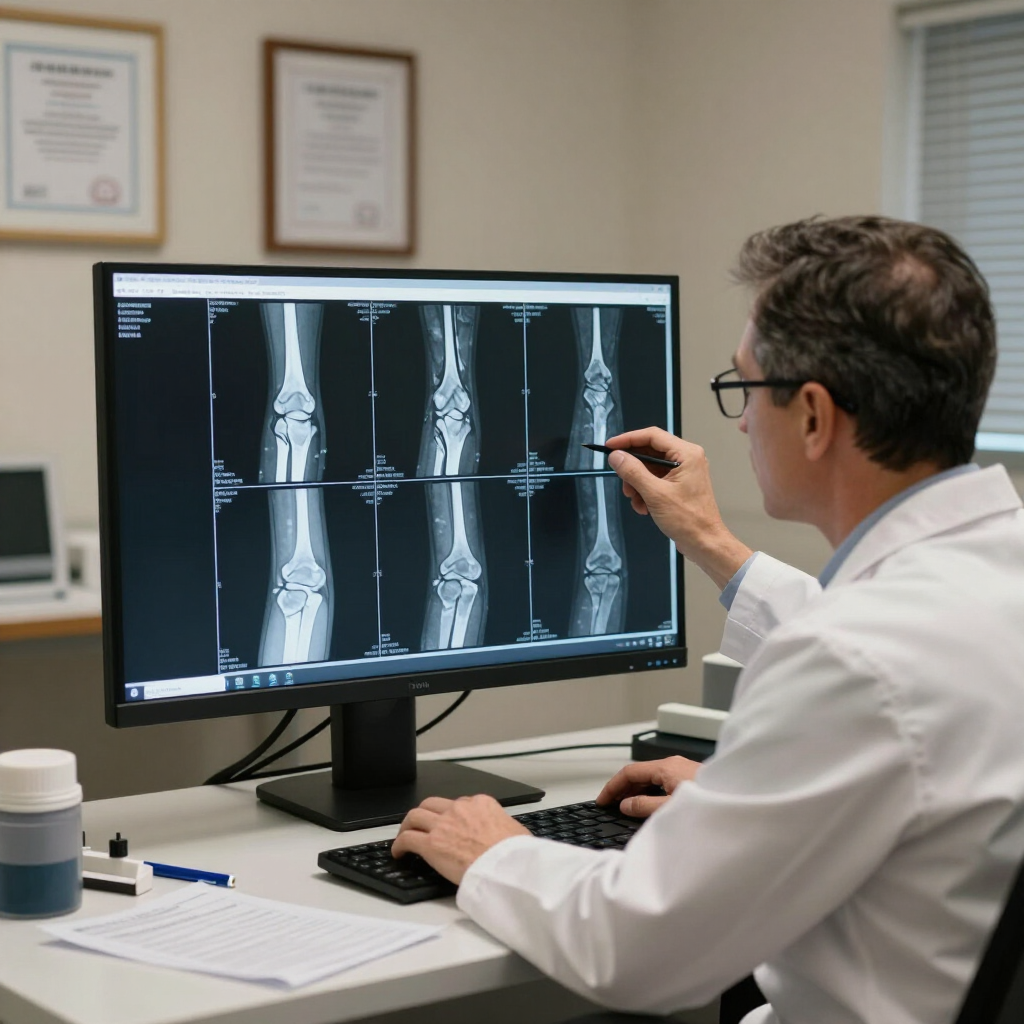
A radiologist reviews the MRI images and writes the formal report. This is the professional who interprets the scan, identifies findings, and describes anything that looks normal, unexpected, or urgent.
That review step is central to MRI scan results time. The images are detailed, and the report needs to be clinically accurate. A good radiology report does more than say what was seen. It explains the location, likely significance, and any recommended next steps. In some cases, it may also suggest that your GP or consultant considers further investigation.
Because the reporting process is clinical, not automated, it is better to think of MRI scan results time as a quality-controlled stage rather than a simple delivery window. This is especially important for brain and head MRI, thoracic spine MRI, and MRCP studies, where nuanced findings can affect care decisions. If you are researching those scans, our guides on red flags for headaches, thoracic Spine MRI, and how to diagnose pancreatic cancer can help explain why the report matters so much.
Before we talk about results delivery, it helps to remember that the scan itself is only the first step. This Bristol NHS Foundation Trust video shows what the MRI appointment feels like, which makes the reporting stage easier to understand afterwards.
If a scan is more complex, the radiologist may need extra time to review the images carefully. That is normal. Accurate reporting matters more than rushed reporting, especially when a result will be shared with a treating specialist.
Do you get bad MRI results right away?
Not usually. Most patients do not get a diagnosis at the scanner door. MRI scan results time includes professional reporting, so even concerning findings are typically reviewed and explained in a formal report rather than discussed informally on the spot.
How Are MRI Results Delivered Digitally?
Digital delivery is one of the clearest advantages in private imaging. Once the report is complete, it can be shared electronically, which helps shorten MRI scan results time and makes the handover more efficient.
At MRI Plus, digital reporting means your result can be used quickly by the people involved in your care. That may include your GP, consultant, physiotherapist, or another specialist. It also helps if you are juggling appointments, because you are not waiting for paperwork to catch up.
This matters when symptoms are affecting daily life. For example, a patient with persistent back pain may want the report before a physio review. Someone with headaches may need the result before a neurology appointment. A patient with suspected biliary or pancreatic problems may need the report to keep a gastroenterology pathway moving. In each case, MRI scan results time is important because it supports decisions, not just information.
For a broader view of the patient journey, see our private diagnostic imaging guide and our Self-Referral Form to Pay. Both explain how private pathways can reduce friction before and after the scan.
If you are someone who feels anxious waiting for news, digital results can be reassuring. You know the report is being handled within a defined process, and you are not left guessing about what happens next. As a result, MRI scan results time feels more transparent and more manageable.
Can results be sent to your GP or consultant?
Yes. They can usually be shared directly with your GP or consultant once the report is complete. That makes MRI scan results time more useful, because the result reaches the clinician who can act on it.
What Happens if Follow-Up Is Needed?
If the report shows something concerning, the next step depends on what the radiologist saw and how urgent it is. In some cases, you may be advised to contact your GP or specialist promptly. In others, the report may recommend additional imaging or a targeted clinical review.
This is why MRI scan results time is only part of the story. The report needs to be understood in context. A scan can show inflammation, structural change, a suspected lesion, or an abnormality that needs correlation with symptoms and examination. It can also show nothing significant, which is valuable information in itself.
So, what happens if an MRI shows something concerning? Usually, the result is formalised in the radiology report and shared with the appropriate clinician. They then decide whether you need referral, monitoring, treatment, or another test. That is the safest way to handle MRI scan results time, because it keeps the clinical decision with the right professional.
If you are unsure whether your symptoms justify a scan, our article on red flags for headaches may help if head symptoms are the concern. Similarly, the thoracic spine MRI guide can help if your pain is focused in the upper back.
When a follow-up is needed, fast reporting helps the next clinician act sooner. That is one reason patients care so much about MRI scan results time. It affects how quickly they move from uncertainty to a plan.
What can MRI scans detect?
MRI scans can detect changes in soft tissue, organs, joints, the spine, and the brain. Depending on the area scanned, they may help identify inflammation, injury, structural abnormality, or a suspicious lesion.
What If I Have No Results After 4 Weeks of MRI?
If you have no results after 4 weeks, you should contact the provider and ask for an update. That is a reasonable next step, because MRI scan results time should not leave you in the dark.
A delay does not always mean a problem with the scan. Sometimes the report is waiting for final review, there may be an administrative issue, or the result may have been sent to the wrong contact details. However, you should not assume everything is fine if nobody has told you anything. Follow up directly.
When you call, ask three things. First, whether the report has been completed. Second, who it has been sent to. Third, whether any action is needed from you. Clear answers reduce confusion and help you avoid another delay.
If your symptoms are worsening, do not wait for the report alone. Speak to a clinician or seek urgent medical advice if needed. MRI scan results time matters, but symptoms always come first.
At MRI Plus, our digital process is designed to reduce that uncertainty. Therefore, patients can move from scan to report with far less chasing. If you are comparing options, that convenience is often what makes private reporting feel worth it.
When should you chase a delayed MRI result?
You should chase it if you have waited longer than expected, if your symptoms are urgent, or if nobody has confirmed where the report was sent. A calm follow-up is the right response when MRI scan results time is unclear.
Can MRI Scan Results Time Help You Plan the Next Step?
Yes. Faster MRI scan results time can help you plan treatment, referrals, and reassurance with less waiting. That is especially useful when you need a report for a GP, consultant, physio, or specialist appointment.
Private MRI works best when speed and clarity both matter. If you are concerned about head symptoms, spinal pain, or abdominal issues, the right report can support earlier decisions. It may confirm a problem, rule one out, or show where further investigation is needed. In every case, the report is what turns images into action.
That is why MRI Plus focuses on digital reporting as part of the service, not an afterthought. It keeps the process practical for patients who want answers without unnecessary delay. It also makes sharing easier when you are moving between providers.
If you want to explore appointment options, our MRI scan near me page and MRI Scan cost guide can help you compare the wider private pathway. The main message is simple: MRI scan results time should support your care, not slow it down.
Why digital reporting matters for patients in London
London patients often need quick communication between multiple clinicians. Digital reports support that flow. As a result, MRI scan results time becomes easier to manage when speed, convenience, and next-step planning are all important.
Key Takeaways
- MRI scan results time is the period between the scan and the formal radiology report, not the scan itself.
- Private MRI pathways are often faster because reporting is streamlined and delivered digitally.
- A radiologist reviews the images, and the report is then shared with the right clinician or referrer.
- If results are delayed beyond expectations, patients should contact the provider and ask where the report is.
- Digital reporting helps patients move more quickly from scan results to treatment, reassurance, or follow-up.
Frequently Asked Questions
What can MRI scans detect?
MRI scans can detect changes in soft tissue, organs, joints, the spine, and the brain. They are especially useful when doctors need detailed images of structures that do not show as clearly on some other scans. In the context of MRI scan results time, the important point is that the report explains what those images mean clinically.
Do you get bad MRI results right away?
Usually, no. MRI scan results time includes formal review by a radiologist, so even concerning findings are generally explained in a written report rather than at the scanner. If something urgent is seen, the provider may escalate it sooner, but most patients still receive the full report through the usual process.
What happens if an MRI shows something concerning?
The radiologist includes the finding in the report and shares it with the appropriate clinician. That clinician then decides on the next step, which may include follow-up, more tests, or treatment. MRI scan results time is important here because quicker reporting can help move care forward sooner.
What if I have no results after 4 weeks of MRI?
Contact the provider and ask whether the report has been completed and where it was sent. You should not keep waiting without an update, especially if your symptoms are ongoing or worsening. A delay may be administrative, but it still needs checking, because MRI scan results time should be clear and traceable.