Private Diagnostic Imaging: MRI, Endoscopy and Outpatient Investigations
Quick Answer
Private diagnostic imaging gives patients faster access to scans, specialist assessment and digital reporting outside the standard NHS pathway. It can include MRI, endoscopy and outpatient investigations, making it useful when symptoms need prompt answers, results need to be shared quickly, or comfort and flexibility matter.
Private diagnostic imaging helps patients get answers sooner, with a clearer pathway from symptoms to scan, report and next step. For many people, that matters when pain, neurological symptoms, abdominal concerns or suspected injury need prompt review, or when NHS waiting times are too long. MRI Plus provides private diagnostic imaging as a broader service, not just an MRI booking line. That means imaging, endoscopy, outpatient assessment and digital reporting can sit within one joined-up pathway. If you want a fast scan, support with self-referral or a report you can share with your GP or consultant, the process is designed to be practical and efficient. You can also start with helpful guidance such as what to expect from a private MRI scan, or browse the MRI Plus health and MRI insights blog for symptom-led articles. In other words, private diagnostic imaging is not only about booking a test. It is about getting the right investigation, clear reporting and a faster route to care.
Fast Access to Private Diagnostic Imaging
Private diagnostic imaging is designed to reduce delays between symptoms and diagnosis. It gives patients a faster route to scans and investigations, with clear booking support and digital results. That is especially helpful when someone needs reassurance, a specialist opinion, or evidence to guide treatment.
At MRI Plus, the service model is broader than one scan type. Patients can be guided toward the right investigation, whether that is MRI, endoscopy or an outpatient review. That matters because the best test depends on the symptom pattern. For example, back pain, head symptoms and abdominal complaints usually need different pathways.
This is where private diagnostic imaging can feel more efficient. You are not left guessing which department to call. Instead, you can move from enquiry to assessment, then to reporting and onward referral if needed. If you are looking for location-specific support, the MRI scan near me explains how patients often choose a site based on speed, comfort and results access.
A useful way to think about private diagnostic imaging is this:
- the scan or procedure answers the clinical question
- the report explains what was found
- the result can then be shared with the next clinician
That joined-up structure is what many patients want most. They are not only paying for access. They are paying for clarity, speed and a sensible pathway forward.

Diagnostic Imaging Services Available
Private diagnostic imaging should cover more than one test, because different symptoms need different investigations. That is why MRI Plus positions itself as a broader diagnostics provider. The goal is to match the right service to the right clinical question.
Many patients start with imaging, but some need endoscopy or outpatient assessment as well. For abdominal symptoms, swallowing issues or suspected digestive conditions, a procedure may be more informative than a scan alone. For pain, trauma or neurological symptoms, MRI is often the key first step. Therefore, a multi-service clinic can reduce back-and-forth and help patients move faster.
If you are exploring service depth, it can help to compare how broader providers present their pathways. For example, spire health care scans and investigations are often grouped together because the right test depends on the question being asked. MRI Plus follows a similar clinical logic, while staying focused on patient access and reporting quality.
Private diagnostic imaging is especially valuable when digital sharing matters. A report that can be sent to a GP, physiotherapist or consultant saves time and avoids repeated explanations. It also supports continuity of care if you need onward treatment.
For patients with more specific symptom clusters, related guides can help narrow the choice. A head pain work-up may start with red flags for headaches and when an MRI is appropriate. Abdominal concern pathways may point toward how to diagnose pancreatic cancer, where imaging plays a central role.
A strong private diagnostic imaging service should make three things easy:
- choosing the right test
- arranging the appointment
- receiving a clear report quickly
Private MRI Scans
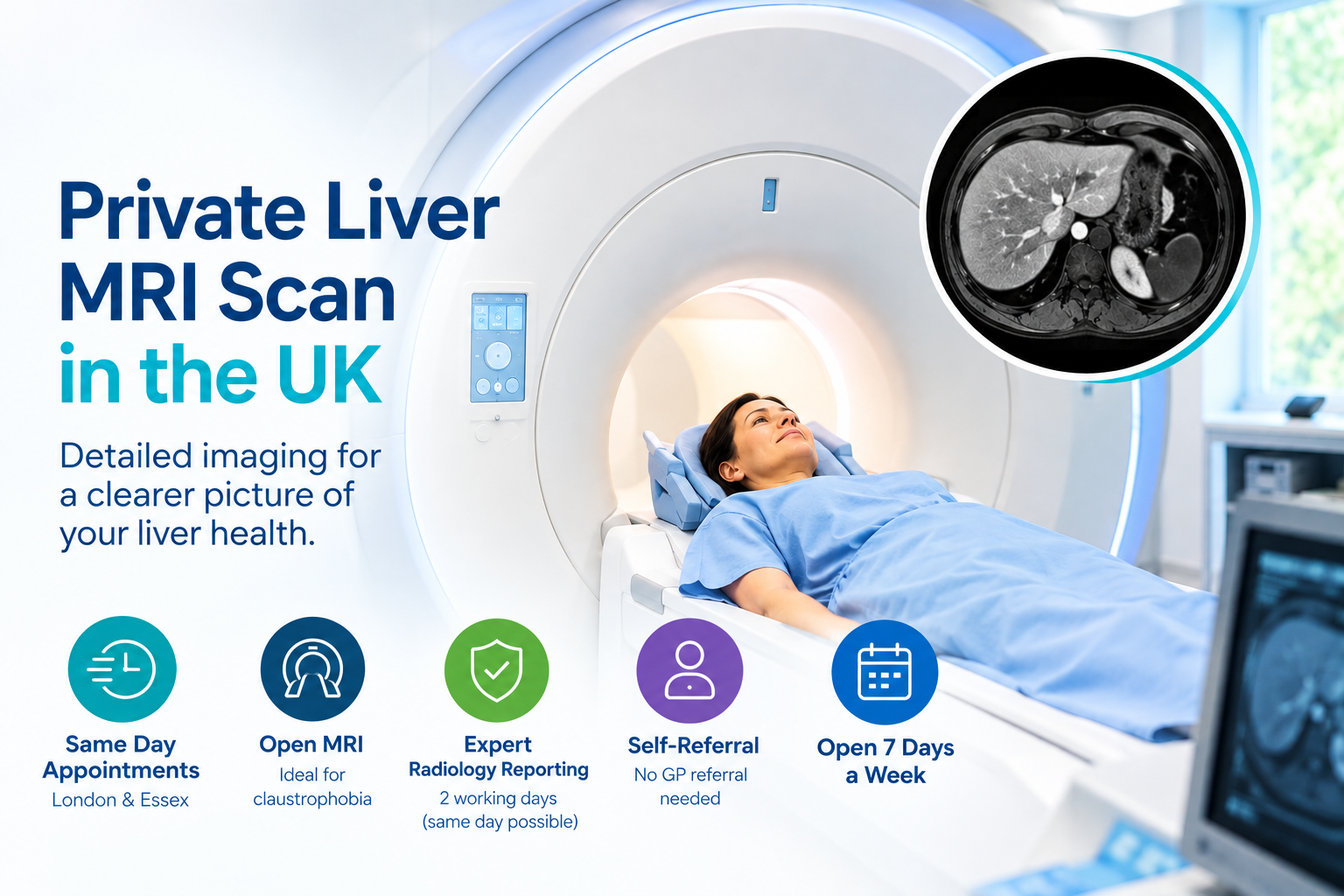
Private MRI scans remain one of the most requested parts of private diagnostic imaging. They are useful for soft tissue, joint, spine, brain and abdominal assessment, especially when symptoms are persistent or unclear. MRI Plus offers private MRI scan appointments, open MRI options, brain and head MRI scans, thoracic spine MRI scans and MRCP MRI scans for pancreatic and biliary assessment.
That variety matters. Someone with claustrophobia may prefer an open MRI pathway. Someone with head symptoms may need a more focused brain study. Someone with upper abdominal symptoms may need MRCP imaging to look at the bile ducts and pancreas.
If you want more context before booking, the best open MRI in London is useful for patients who prioritise comfort without losing diagnostic value. For broader preparation, the private MRI scan cost guide explains what patients usually ask before they book.
Private diagnostic imaging works best when the scan question is precise. The clearer the clinical question, the more useful the report becomes.
Endoscopy Procedures
Endoscopy is an important part of private diagnostic imaging when symptoms involve the digestive tract or upper gastrointestinal system. It allows direct visual assessment, which can be more appropriate than imaging alone for certain concerns.
This matters for patients with swallowing problems, reflux symptoms, stomach pain, bleeding, unexplained weight loss or persistent digestive changes. In those cases, a clinic that offers both imaging and endoscopy can help direct the patient to the most suitable investigation sooner.
Private diagnostic imaging is not limited to pictures on a screen. It also includes procedures that help clinicians inspect tissue directly, take biopsies if needed and build a clearer diagnosis. That broader capability can reduce delays when symptoms do not fit neatly into one category.
Consultant-Led Outpatient Appointments
Consultant-led outpatient appointments bridge the gap between symptoms and investigation. They help patients explain their concerns, review previous results and decide what test is most appropriate next.
That is a key advantage of private diagnostic imaging. Instead of booking a scan in isolation, patients can combine assessment with investigation planning. As a result, the pathway becomes more efficient and more clinically coherent.
Outpatient review is particularly helpful for complex symptoms, repeat concerns or cases where the patient is unsure whether MRI, endoscopy or another test is the best next step. It also supports safer self-referral guidance, because the clinic can signpost patients to the right level of care.
Who Uses Private Diagnostic Imaging?
Private diagnostic imaging is used by people who want answers sooner, want more control over appointment timing, or need a report they can share quickly. It is especially relevant for patients in London and across the UK who are balancing symptoms, work, family and long NHS waits.
Common reasons include pain, injury, neurological symptoms, abdominal concerns and claustrophobia. Some patients need confirmation before starting physiotherapy or treatment. Others need to rule out something more serious before they can move on. In each case, private diagnostic imaging gives a faster route to clarity.
It is also useful for people who already know what they need. A patient with a clinician’s suggestion may want a direct MRI pathway. Another may need support deciding whether imaging or a procedure is more appropriate. Meanwhile, some patients simply want digital results they can forward to a GP or consultant without delay.
Private diagnostic imaging is often chosen by people who value convenience as much as speed. That can include self-pay patients, patients using insurance, and those seeking a second opinion after a previous scan or consultation. The common thread is usually the same: they want the next step, not more waiting.
If you are comparing options, it may help to read the self-pay MRI scan guide and the MRI scan UK overview. Both help explain how private diagnostic imaging fits into the wider care journey.
In practice, the people who benefit most from private diagnostic imaging are those who need:
- faster access to investigation
- clearer communication about the right test
- reports that can be shared digitally
- a pathway that links diagnosis to follow-up
Reports, Results and Clinical Governance in private diagnostic imaging
Private diagnostic imaging is only as useful as the report behind it. A scan or procedure should end with clear, clinically useful reporting that explains findings in plain language and supports the next step.
At MRI Plus, digital reporting is part of the value proposition. That means patients are not left chasing paper copies or waiting for information to be manually forwarded. Instead, results can be shared more efficiently with GPs, consultants, physiotherapists or other specialists.
Clinical governance also matters. Private diagnostic imaging should be delivered with appropriate oversight, safe pathways and sensible escalation when something needs urgent review. A good provider does not simply perform a test. It also manages reporting quality, communication and onward advice.
For patients, that means three practical benefits. First, the result is easier to understand. Second, it is easier to share. Third, it is easier to use in follow-up care. Those are small details, but they make a major difference when someone is anxious about symptoms.
If you want a useful external reference point, diagnostic tests and imaging are typically described as part of a broader clinical service, which reinforces why governance and referral pathways matter. That same approach supports better private diagnostic imaging.
In other words, the report is not an afterthought. It is part of the service. Without it, the scan is only half the answer.
For GPs, Consultants and Referrers
Private diagnostic imaging is more effective when referrers can trust the pathway. GPs, consultants and allied health professionals need a provider that communicates clearly, reports promptly and matches the right investigation to the right presentation.
MRI Plus is built for that kind of joined-up use. Referrers want clarity on availability, reporting, digital access and whether a patient needs imaging, endoscopy or outpatient review. Patients benefit when those steps are aligned instead of treated as separate services.
This is also where symptom-specific guidance can support decision-making. A referrer dealing with persistent head pain may find the headache red flags guide useful. Someone considering pancreatic or biliary assessment may benefit from the pancreatic cancer diagnosis guide. These resources help patients and referrers understand why a particular investigation is chosen.
Private diagnostic imaging is valuable to referrers because it can reduce friction. It helps patients move from suspicion to evidence. It can also support earlier treatment decisions, especially when a scan result changes the care plan.
For a service that is meant to support professional workflows, digital reporting and clean communication are not optional. They are essential. That is why private diagnostic imaging should be judged not only by appointment speed, but by how well it fits into wider care.
How to Book a Diagnostic Appointment
Booking private diagnostic imaging should be straightforward. The best process is simple, transparent and designed to match the patient’s symptoms to the right investigation.
At MRI Plus, patients can usually begin with guidance on the service they need, then move toward booking support and digital results. Some people come with a referral. Others need self-referral guidance. In either case, the aim is to make the pathway easy to follow.
A good booking process should answer a few practical questions early. What symptom is being investigated? Is MRI, endoscopy or outpatient review most suitable? Is an open MRI better for comfort? Who will receive the report? These details affect the quality of the pathway.
If you are comparing providers, check how they handle logistics as well as availability. The difference between a useful and a frustrating private diagnostic imaging experience is often the booking and reporting process, not just the appointment itself.
For patients wanting a simple starting point, the private MRI scan near me guide and MRI Plus blog can help you understand what to expect before you book. That preparation makes it easier to choose the right service.
A practical booking process usually looks like this:
- explain your symptoms or referral reason
- choose the most suitable investigation
- confirm who needs the result
- book the appointment and receive next-step instructions
That is what convenient private diagnostic imaging should feel like: clear, calm and clinically sensible.
Key Takeaways
- Private diagnostic imaging gives patients faster access to scans, procedures and outpatient assessment.
- MRI Plus positions private diagnostic imaging as a broader pathway, not just an MRI booking service.
- Digital reporting makes it easier to share results with GPs, consultants and other specialists.
- The right investigation depends on the symptom, so imaging, endoscopy and outpatient review all have a role.
- A good private diagnostic imaging provider should make booking, reporting and onward care simple.
Frequently Asked Questions
What is private diagnostic imaging?
Private diagnostic imaging is a healthcare service that gives patients faster access to scans, procedures and outpatient investigations. It usually includes imaging such as MRI, but it can also include endoscopy, consultant review and digital reporting so the result can be shared quickly with the next clinician.
Why do patients choose private diagnostic imaging instead of waiting?
Patients often choose private diagnostic imaging when symptoms need prompt answers or when NHS waiting times are too long. It is also useful when comfort, appointment flexibility or digital results matter, especially if the report needs to be sent to a GP, consultant or physiotherapist.
Does private diagnostic imaging only mean MRI?
No, private diagnostic imaging does not only mean MRI. It can also include endoscopy and outpatient assessment, which is important because some symptoms need direct visual inspection or specialist review rather than imaging alone.
Can I use private diagnostic imaging results with NHS care?
Yes, in many cases private diagnostic imaging results can support NHS care. A clear digital report can be shared with your GP or NHS specialist, which may help guide further treatment, referral or follow-up.
Is private diagnostic imaging suitable for claustrophobia or anxiety?
Yes, it can be suitable, especially when open MRI or a more flexible pathway is available. If anxiety is a concern, tell the clinic early so they can help match you with the most appropriate appointment and explain the process clearly.