What Can an MRI Detect?
An MRI scan can detect abnormalities in soft tissues, including tumors, cysts, and inflammation. It is highly effective at identifying early-stage cancer, brain lesions, spinal injuries, and issues within the liver or prostate. By using magnetic fields and radio waves, it creates detailed images without harmful ionizing radiation.
How does an MRI detect early-stage cancer?
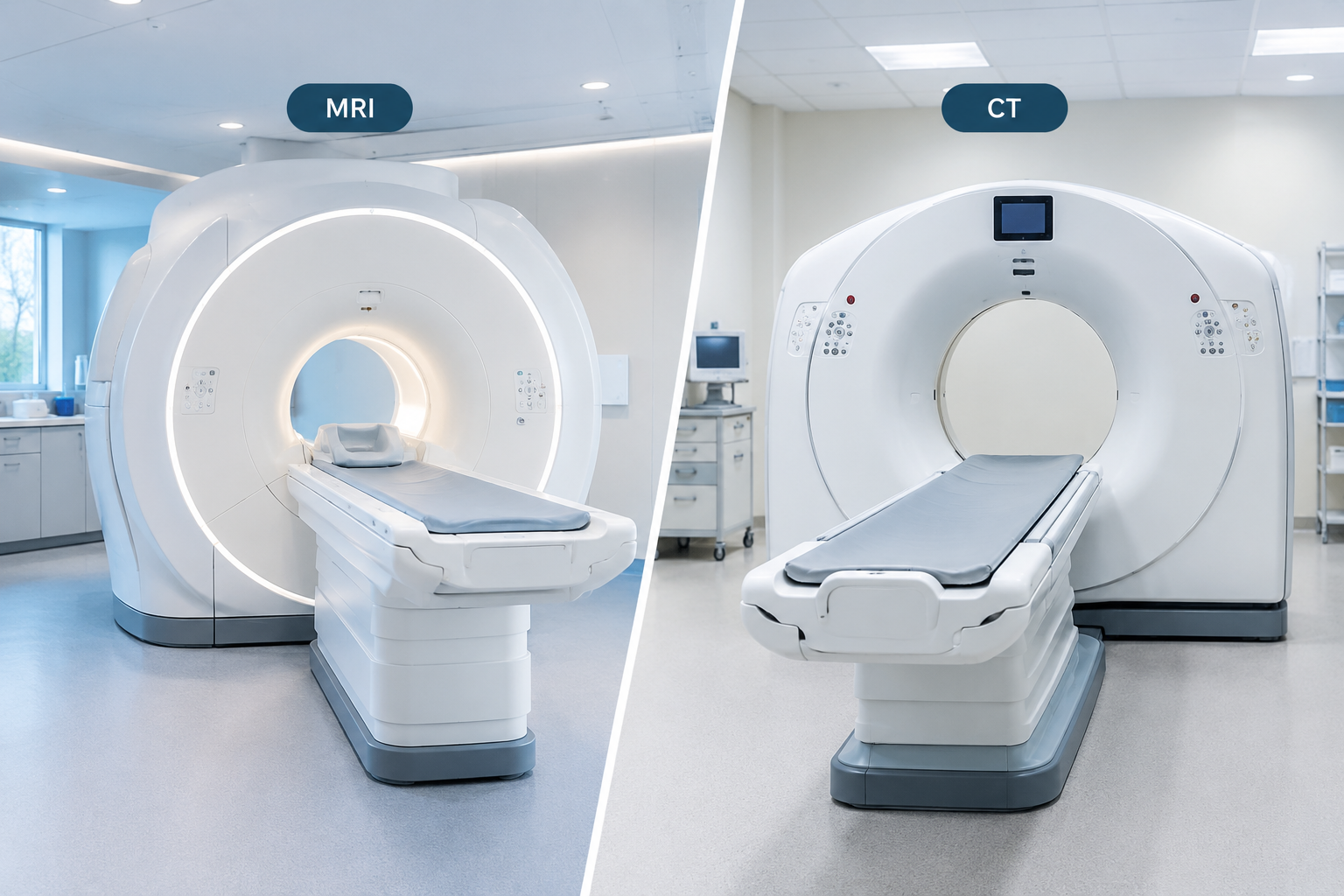
Magnetic Resonance Imaging (MRI) is one of the most powerful tools in modern medicine for oncological screening. Unlike X-rays or CT scans, which are best for viewing bones and dense structures, an MRI shows soft tissue clearly.
It also helps tell the difference between healthy and diseased soft tissue. This precision is vital for spotting early cancer cells before they develop into large, symptomatic masses.
When a person has an MRI, the magnets in the machine align the protons in the body. When radio waves are used, the protons emit signals that are recorded and turned into a 3D image. Cancerous tissue often has a different density or is more watery than healthy tissue, appearing as a distinct “anomaly” on the scan. This enables radiologists to visualise the precise location, shape and size of a tumour with stunning clarity.
In the context of early detection, MRI is often used for:
- Identifying small tumors in the breast that mammograms might miss.
- Detection of early stage prostate cancer in peripheral zone.
- Mapping the extent of a tumor to see if it has spread to nearby lymph nodes.
- Differentiation of benign cysts from malignant tumours.
- Monitoring patients with a high genetic risk of developing cancer.
Early detection gives you more treatment options. At MRI Plus, we understand that time is the most important asset you have in the case of cancer. That’s why we focus on fast access to these scans, so that the diagnostic journey starts without the traditional delays of the healthcare system.
Common Conditions MRI Scans Identify
Although cancer detection is a key use case, MRI scan is a versatile diagnostic tool used to assess a wide range of medical conditions. By providing highly detailed images of soft tissues, it can often be the most reliable way to determine the cause of internal pain or neurological symptoms.
Physicians frequently request an MRI to investigate the following areas:
- Neurological Disorders: Including strokes, multiple sclerosis (MS), and aneurysms.
- Musculoskeletal Injuries: Such as torn ligaments (ACL/MCL), cartilage damage, and herniated discs.
- Cardiac Issues: Assessing the structure of the heart and identifying damage from a heart attack.
- Abdominal Abnormalities: Investigating the liver, kidneys, and pancreas for stones or disease.
- Pelvic Health: Evaluating the uterus and ovaries in women or the prostate in men.
Having a clear view of what is happening inside the body supports a more targeted treatment plan. Rather than taking a “wait and see” approach, a scan provides the evidence needed to make informed next steps. This level of clarity is central to our service at MRI Plus, helping to reduce uncertainty throughout your healthcare journey.
What can a brain MRI reveal about your health?
The brain is one of the most complex organs to image, and MRI is widely regarded as the gold standard. Because it is enclosed by the thick bone of the skull, traditional imaging methods can struggle to produce a clear view. MRI, however, can effectively image through the bone, revealing the fine detail of both grey and white matter.
If you are experiencing chronic headaches, dizziness, or changes in vision, a brain MRI can rule out or confirm several serious conditions. It can detect very small lesions which may be the first indications of multiple sclerosis. It is also the best way to find brain tumours that start in the brain (primary) or those that come from elsewhere (metastatic).
Beyond tumors, a brain MRI can detect:
- Vascular Issues: Including blood clots or weakened artery walls (aneurysms).
- Infectious Diseases: Such as meningitis or brain abscesses.
- Developmental Anomalies: Structural issues that have been present since birth.
- Dementia and Alzheimer’s: Showing patterns of brain shrinkage (atrophy).
- Traumatic Brain Injury (TBI): Identifying small bleeds or bruising after an accident.
The Role of MRI in Prostate Health
For men, the prostate is a common area of concern, especially as they age. Traditional screening methods such as the PSA blood test or a physical exam are useful but frequently lack the detail needed for a definitive diagnosis. This is where a Multi-Parametric MRI (mpMRI) of the prostate becomes essential.
An MRI can help doctors determine if a biopsy is even necessary. By scoring the results using the PI-RADS system, clinicians can assess the likelihood of clinically significant cancer. This saves many men from undergoing invasive procedures if the scan shows no cause for concern. If a biopsy is required, the MRI images serve as a map, enabling the doctor to precisely locate the suspicious tissue area.
The benefits of a prostate MRI include:
- Non-invasive assessment of the entire prostate gland.
- High sensitivity for detecting aggressive cancers.
- Accurate staging to see if cancer has breached the prostate capsule.
- Monitoring for recurrence after surgery or radiation.
- Reducing the number of "unnecessary" biopsies for low-risk patients.
We offer specialised imaging for prostate health, ensuring that men in London and Leigh on Sea have access to the latest diagnostic technology. Our goal is to provide clarity and peace of mind during what can be a very stressful time.
Can an MRI find inflammation in internal organs?
Yes, one of the most significant advantages of an MRI is its sensitivity to inflammation and fluid. Inflammation is the body's natural response to injury or infection, but when it becomes chronic, it can lead to serious organ damage. An MRI can detect the subtle changes in tissue signal that indicate an inflammatory process is underway.
In the liver, for example, an MRI can detect fatty liver disease or hepatitis by assessing the water and fat content within the cells. In the digestive tract, it is commonly used to monitor inflammatory bowel diseases (IBD) such as Crohn’s disease or ulcerative colitis. Unlike an endoscopy, which examines the inner lining of the bowel, an MRI can evaluate the full thickness of the intestinal wall and identify complications such as fistulas or abscesses.
Other areas where MRI detects inflammation include:
- The Heart (Myocarditis): Identifying inflammation of the heart muscle often caused by viral infections.
- Joints and Tendons: Spotting bursitis or synovitis before permanent joint damage occurs.
- The Spine: Detecting discitis (infection or inflammation of the spinal discs).
- Pelvic Inflammatory Disease (PID): Checking for infection in the female reproductive organs.
- Biliary System: Identifying inflammation in the bile ducts (cholangitis).
Identifying inflammation early allows for faster intervention with anti-inflammatory medications or lifestyle changes, often preventing the need for surgery later on. This is the kind of proactive approach we are encouraging in our latest updates on MRI Plus News .
Why Speed Matters in Diagnostic Imaging
When you’re concerned about a possible health issue, each day spent waiting for a scan or test result can feel interminable. In the UK healthcare system, long waiting lists can sometimes delay important diagnoses. These delays can affect both your mental wellbeing and your clinical outcome, as early detection is closely associated with better patient results.
If you choose a private MRI scan, such as MRI Plus, you can avoid the queues. We have same-day appointment availability, often in days not months. But speed isn't just about the appointment; it's also about the reporting. Our efficient digital workflows mean your scans are read by qualified radiologists and results returned to you, or your consultant, in a timely manner.
Our approach focuses on:
- Reducing Stress: Getting an answer quickly ends the period of uncertainty.
- Fast-Tracking Treatment: The sooner you have a diagnosis, the sooner you can start therapy.
- Clinical Accuracy: Speed never comes at the expense of quality; our scans are high-resolution and expert-read.
- Patient Convenience: Flexible booking that fits your schedule, not the other way around.
- Integrated Care: We work alongside your healthcare providers to ensure a seamless transition from scan to treatment.

Key Takeaways: What You Need to Know
In summary, an MRI is a versatile and essential diagnostic tool that provides unparalleled detail of the body's internal soft tissues. Whether you are investigating persistent pain, screening for early-stage cancer, or monitoring a chronic condition, an MRI offers the clarity needed to make informed healthcare decisions.
- Comprehensive Detection: MRI identifies tumors, cysts, inflammation, and structural injuries.
- No Radiation: It is a safe, non-invasive alternative to CT scans for many conditions.
- Early Intervention: Catching issues like cancer or organ disease early significantly improves prognosis.
- Expert Results: Detailed imaging allows for precise, consultant-led diagnosis.
- Rapid Access: Private providers like MRI Plus ensure you get answers without the wait.
If you’ve been advised to have a scan or you’re concerned about your health, don’t delay. Getting prompt access to high-quality diagnostic tests is an important first step towards recovery and peace of mind.
References :
Website, N. (2026e, June 8). MRI scan. nhs.uk. https://www.nhs.uk/tests-and-treatments/mri-scan/
MRI scan. (n.d.). 111.wales.nhs.uk. https://111.wales.nhs.uk/encyclopaedia/m/article/mriscan/
MRI Scans from £199. (n.d.). https://mriplus.co.uk/services/mri-scans