What is an MRI Scan Used to Diagnose?
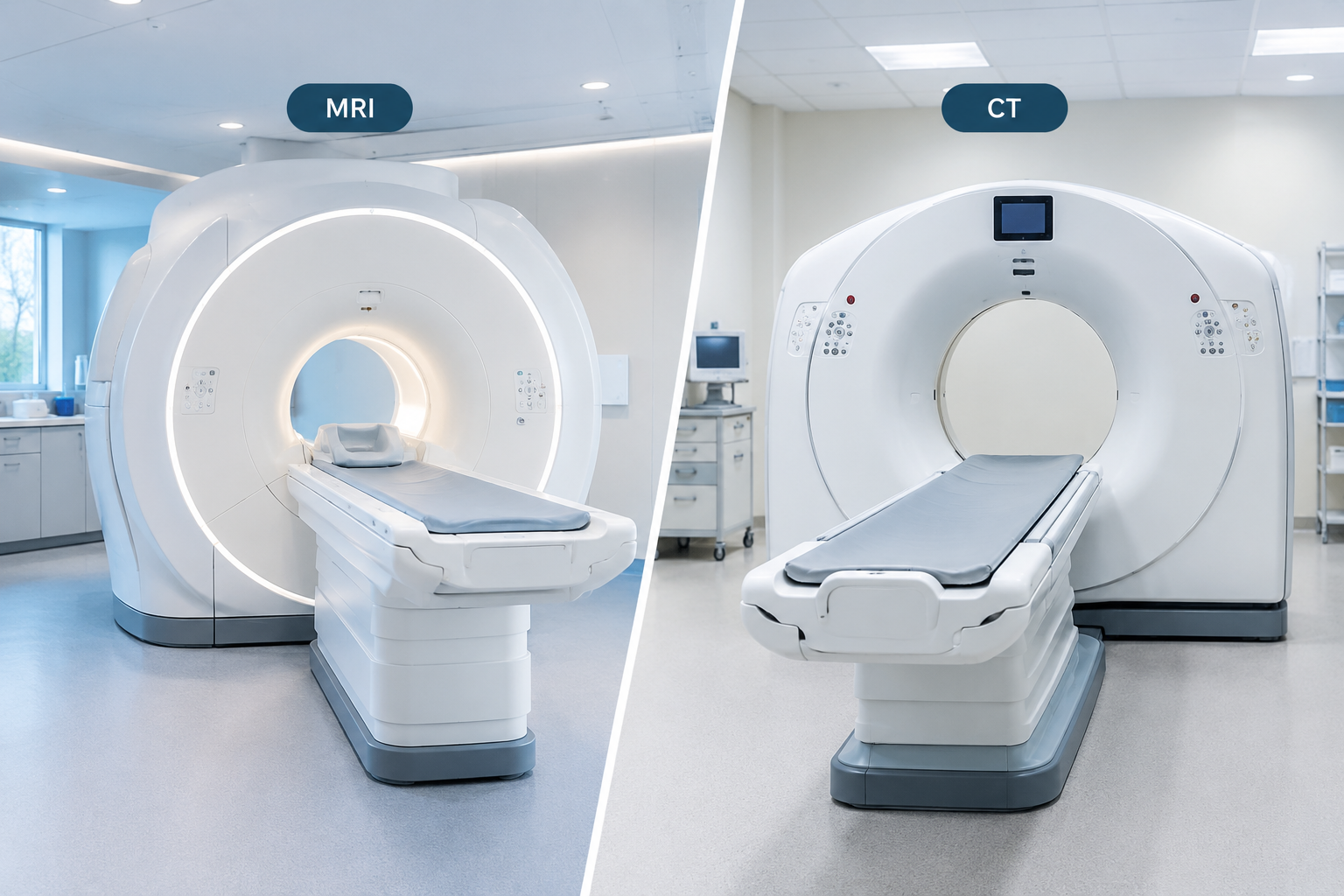
An MRI (magnetic resonance imaging) scan is a non-invasive test. It uses strong magnetic fields and radio waves.
It creates detailed, three-dimensional images of the body's internal structures. It mainly helps diagnose neurological disorders and musculoskeletal injuries. It can also help detect cancers and conditions affecting internal organs.
What are the most common conditions diagnosed by an MRI?
When people ask what an MRI scan is used for, it's typically to clarify specific medical problems. MRI scans are very versatile as they provide a level of detail that X-rays or CT scans simply can't match, particularly with soft tissues. At MRI Plus, we frequently see patients who require answers about complex symptoms that have been troubling them for weeks or months.
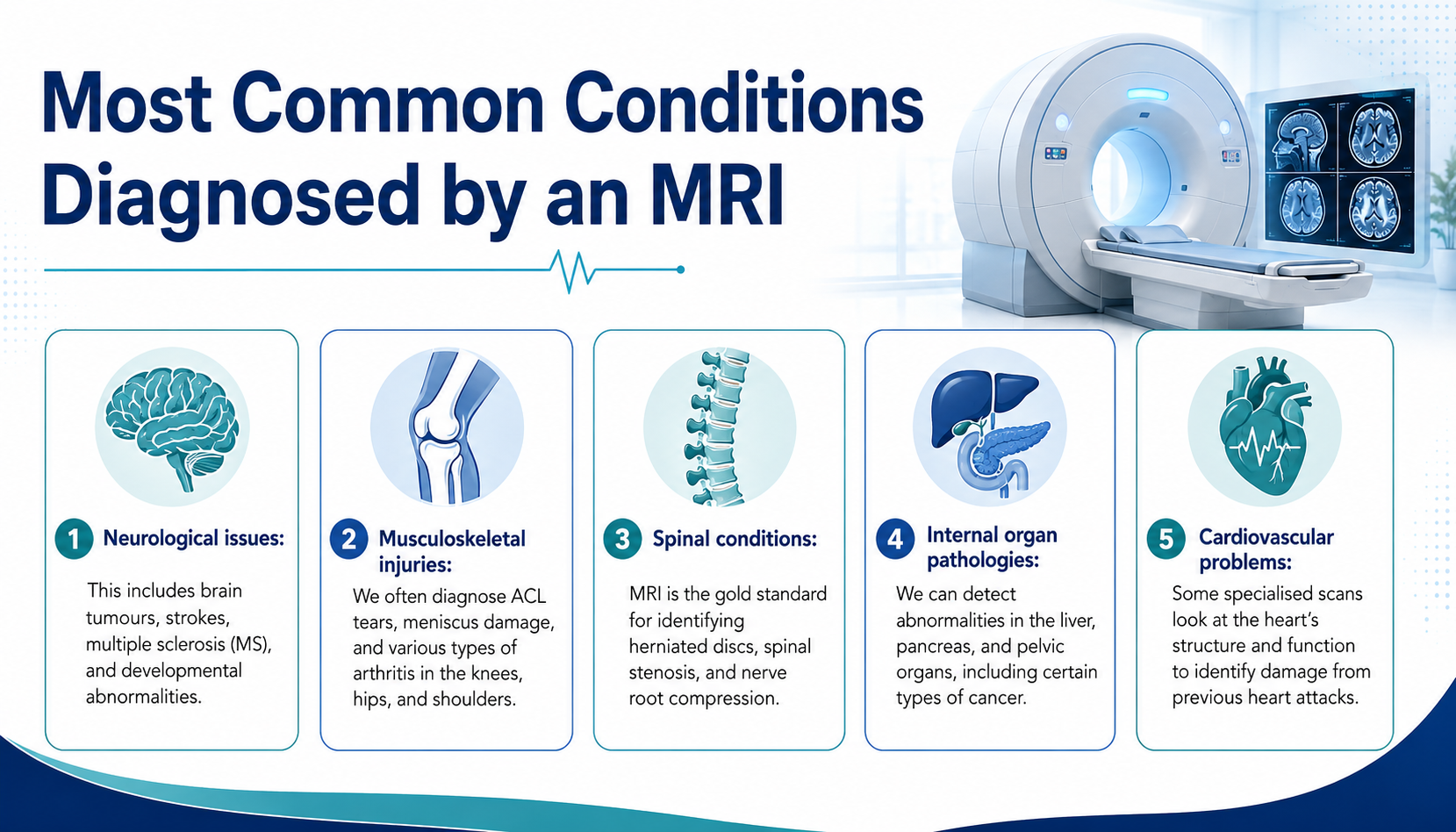
These are the most common conditions we diagnose through our imaging services include:
- Neurological issues: This includes brain tumours, strokes, multiple sclerosis (MS), and developmental abnormalities.
- Musculoskeletal injuries: We often diagnose ACL tears, meniscus damage, and various types of arthritis in the knees, hips, and shoulders.
- Spinal conditions: MRI is the gold standard for identifying herniated discs, spinal stenosis, and nerve root compression.
- Internal organ pathologies: We can detect abnormalities in the liver, pancreas, and pelvic organs, including certain types of cancer.
- Cardiovascular problems: Some specialised scans look at the heart's structure and function to identify damage from previous heart attacks.
By identifying these conditions early, patients can transition from the "investigation" phase to the "treatment" phase much faster. In the UK, speed is often the biggest barrier to recovery, which is why having a clear diagnostic roadmap is so essential for long-term health.
How does an MRI help explain unexplained pain?
I think it is one of the most frustrating things for a patient to have constant pain and not know why. Chronic back pain, frequent headaches or just a general ache in the joints can really affect your quality of life. MRI scans are often the “missing link” in the diagnostic chain, allowing clinicians to see in high resolution exactly what is going on under the skin.
For example, if you’ve been suffering from sciatica, an MRI can show exactly where a disc is pressing against a nerve. Without such visual evidence, treatment becomes a guessing game, resulting in either physical therapy that doesn't work or medication that isn't needed. We can identify the anatomical source of the pain through magnetic resonance imaging, whether it is a torn ligament, a pinched nerve or inflammation within a joint capsule.
That’s why specialists love MRI so much. It takes the conversation from “We think this might be the problem” to “Here is the problem, and here is how we fix it.” For many of our patients in London and Leigh-on-Sea, this clarity brings immediate peace of mind, even before treatment has started.
Understanding MRI for neurological and spinal health
Your nervous system controls your body. If something goes wrong in the brain or spine, the effects can spread widely. MRI is uniquely suited for neurological imaging because it provides incredible contrast between different types of soft tissue, such as grey matter and white matter in the brain.
In our MRI Plus clinics, we use MRI to help diagnose many neurological problems. When a patient presents with symptoms such as persistent dizziness, numbness in the limbs or severe migraines, a scan can rule out serious problems such as tumours or vascular malformations. In the same way, someone with localised back or neck pain can benefit greatly from an MRI of the spine to evaluate the vertebrae and the spinal cord.
- Brain Imaging: Detecting inflammation, bleeding, or structural changes.
- Spinal Column: Visualising the spinal cord, nerve roots, and the discs that sit between vertebrae.
- Vascular Health: Assessing blood flow and identifying potential aneurysms or blockages.
- Degenerative Changes: Monitoring the long-term effects of ageing on the nervous system.
- Treatment Monitoring: Checking how well a patient is responding to neurological treatments or surgeries.
Why choose a private MRI scan UK for your diagnosis?
Patients go to MRI Plus to avoid the long waiting lists associated with the public health system. When you are in pain , or scared of a potential diagnosis, every day counts. A private MRI scan in the UK provides a more efficient alternative, putting your time and health first.
Going private means you are not just a number in a queue. You have prompt appointment scheduling, often in days and not months. MRI Plus also tries to make its atmosphere inviting and comfortable to help offset the stress often associated with medical imaging. We have qualified radiologists who report your results quickly so you can take the results back to your consultant or GP without delay.
Efficiency is not just about speed, it’s about accuracy. Today’s technology and focused clinical expertise allow us to deliver the high quality data your medical team needs to make informed decisions about your care. This transparency in both price and process is what makes us a leading provider in the South East.
Key diagnostic areas covered by MRI Plus
We have acquired considerable expertise in a number of important areas most relevant to our patients, although MRI is a technique which can be used on any part of the body. Whether you’re an athlete recovering from an injury or an individual with a chronic condition, our diagnostic services are tailored to your needs.
Our core focus areas include:
Orthopaedics: Getting patients moving again by working with bones, joints and ligaments.
Neurology: In-depth exploration of the brain and central nervous system.
Gastroenterology: Assisting in the diagnosis of abdominal issues when used alongside endoscopy.
Urology and Pelvic Health: Non-invasive checking of the prostate, bladder, and reproductive organs.
General Diagnostics: Using scans to investigate general symptoms like lumps, bumps, or unexplained systemic pain.
Our approach is always patient-centric. We understand that medical jargon can be overwhelming, so we strive to provide a service that is easy to navigate. From our simple online booking system to our clear communication regarding your scan, we aim to make the process as friction-free as possible. If you want to keep up with the latest in healthcare technology and clinic updates, you can visit our MRI Plus blog for regular insights.
How to prepare for your diagnostic imaging session?
There are a few important steps to take in preparing for an MRI, which is fairly simple, to ensure the best images are obtained. The scanner has a very strong magnet so the most important thing is to make sure you have no metallic objects on your body. That includes jewellery, watches, hearing aids and even some types of clothing with metal fasteners.
When you arrive at one of our MRI Plus Hendon in London or MRI Plus Leigh-on-Sea in Essex locations, our team will guide you through a safety checklist. If you have any internal medical devices, such as pacemakers or cochlear implants, it is vital to inform us beforehand, as these can be affected by the magnetic field. Most scans take between 20 and 45 minutes, during which you will need to remain as still as possible to prevent blurring in the images. We provide ear protection, as the machine can be quite loud, and our staff is always on hand to talk to you through the intercom system if you feel any discomfort.
- Hydration: Usually, you can eat and drink normally unless told otherwise.
- Clothing: Wear comfortable, loose-fitting clothes without metal zips or buttons.
- Documentation: Bring any relevant previous scan reports or doctor referrals.
- Arrive Early: Getting there 15 minutes early helps with the check-in process.
- Relaxation: Try to stay calm; modern MRI machines are much more spacious than older models.
The MRI Plus approach to rapid diagnostics
At MRI Plus we believe that healthcare should be as fast as life. We use the latest in digital tools to make sure your journey from booking to results is seamless. With our integrated CRM and patient management systems, your data is taken care of safely and efficiently, which takes the administrative load off you.
We understand that fear of the unknown is often the hardest part of any medical concern. We alleviate this uncertainty by providing rapid access to imaging and clear, accurate reports. We are committed to clinical quality and transparency, ensuring that every patient gets the same high standard of care, no matter how complex their case may be. “We are proud to be part of the communities in London and Leigh-on-Sea and to bridge the gap in diagnostic availability to help people return to their best health.
Summary and Key Takeaways
MRI scans are an essential diagnostic tool for many conditions . They provide excellent detail of soft tissue and internal organs . Whether you’re seeking answers to unexplained pain, or monitoring a chronic condition, the clarity of magnetic resonance imaging is often the first step to a successful recovery.
- Direct Answers: MRI is used for brain, spine, joint, and organ diagnosis.
- Speed Matters: Private scans at MRI Plus eliminate long waiting times.
- Clarity: MRI explains unexplained pain by visualizing soft tissue and nerves.
- Simplicity: Preparation is easy, and the process is non-invasive.
- Next Steps: If you have persistent symptoms, evaluate whether a private MRI is the right choice to fast-track your treatment plan.
Ready to take the next step in your health journey? Booking a scan with MRI Plus is a simple way to get the answers you deserve, without the wait.
Ready to take the next step in your health journey? Booking a scan with MRI Plus is a simple way to get the answers you deserve, without the wait.
References :
Radiological Society of North America (RSNA) and American College of Radiology (ACR). (n.d.-e). MRI Safety. Radiologyinfo.org. https://www.radiologyinfo.org/en/info/safety-mr
BAMRR, BIR MR committee, British Chapter ISMRM, HSE, IPEM MR SIG, Metrasens Ltd, SCoR, Siemens, Philips Medical, GE Medical, Keevil, S., Gilk, T., Woods, T. O., Grainger, D., & Medicines and Healthcare products Regulatory Agency. (2021). Safety guidelines for magnetic resonance imaging equipment in clinical use. https://assets.publishing.service.gov.uk/government/uploads/system/uploads/attachment_data/file/958486/MRI_guidance_2021-4-03c.pdf