What Does a Knee MRI Show? Conditions & Scan Guide
A knee MRI (Magnetic Resonance Imaging) provides detailed, cross-sectional images of the knee's soft tissues and bones. It is the most effective diagnostic tool for detecting meniscus tears, ACL ruptures, cartilage damage, bone bruises, and inflammatory conditions like bursitis that standard X-rays frequently cannot identify.
What does a knee MRI show?
When you undergo a knee mri scan, the technology uses powerful magnets and radio waves to create a comprehensive map of your joint. Unlike other imaging methods, a knee MRI excels at visualizing soft tissues. This means a consultant can see the intricate details of your ligaments, which act as the stabilizing ropes of your knee, and your tendons, which connect muscle to bone.
The level of detail provided by a knee MRI is truly staggering. It allows radiologists to see the meniscus—the C-shaped pieces of cartilage that act as shock absorbers—in high resolution. Furthermore, it can identify fluid buildup (effusion), hidden fractures, and even early-stage bone marrow changes that indicate stress or injury. For anyone experiencing persistent pain, swelling, or instability, this scan is often the definitive step toward a clear diagnosis.
Common knee conditions detected by MRI
Because of its versatility, a knee MRI is used to diagnose a wide variety of orthopedic and sports-related issues. Here are five of the most common conditions it can detect:
- Ligament Tears (ACL, PCL, MCL): MRI is the gold standard for identifying tears in the Anterior Cruciate Ligament (ACL) or other stabilizing ligaments.
- Meniscus Injuries: It can pinpoint the exact location and severity of a meniscus tear, helping decide if surgery or physical therapy is best.
- Osteoarthritis and Cartilage Wear: The scan reveals the thickness of the protective cartilage and any areas where bone is rubbing on bone.
- Bone Bruises and Stress Fractures: These are often invisible on X-rays but show up clearly as bright areas on an MRI due to internal swelling.
- Tendonitis and Bursitis: It detects inflammation in the patellar tendon or the fluid-filled sacs (bursae) around the joint.
How does an MRI compare to a knee X-ray?
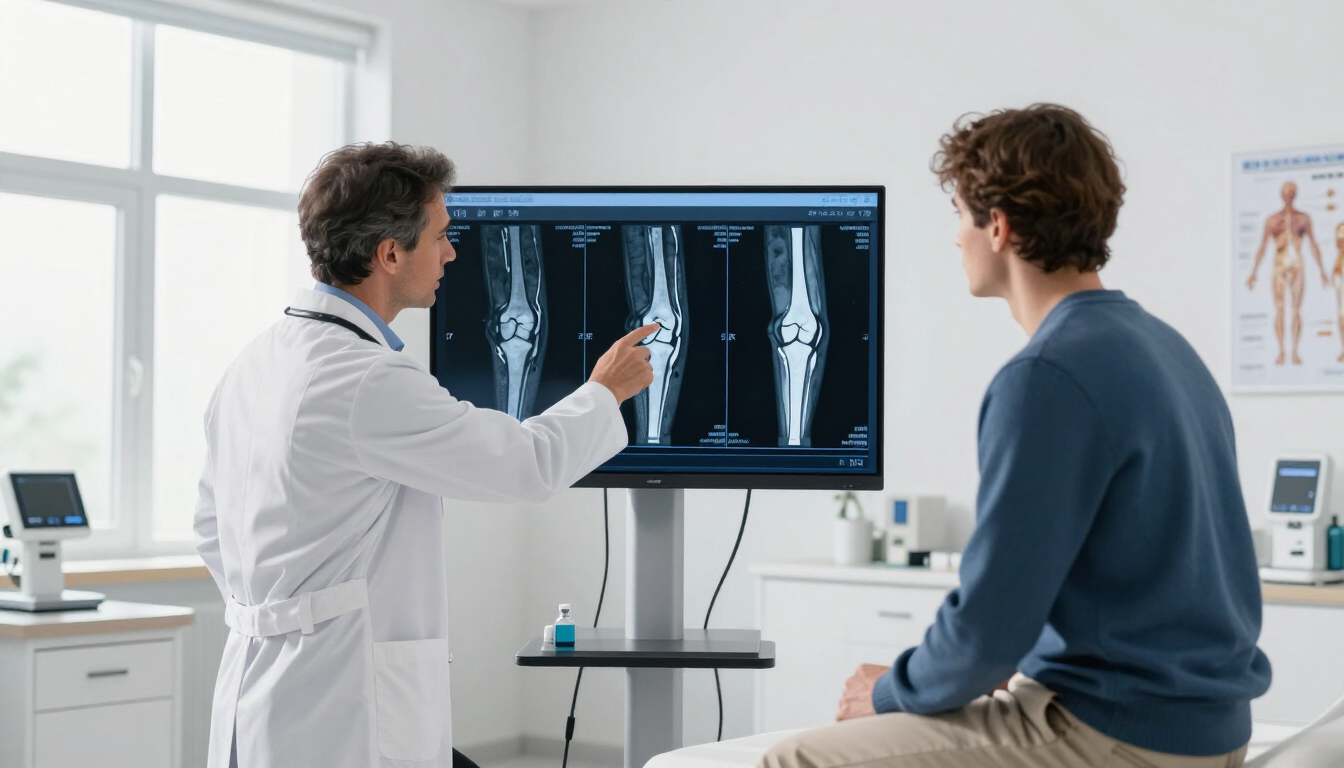
Many patients wonder why they need an MRI if they have already had an X-ray. The simplest explanation is that X-rays and MRIs look at different things. An X-ray is excellent for seeing major bone fractures or severe joint space narrowing. However, an X-ray uses ionizing radiation and passes straight through soft tissues like ligaments and cartilage, leaving them invisible or blurry.
An MRI, on the other hand, uses non-ionizing magnetic fields. It provides a 3D-like view of the entire joint. If your X-ray came back "normal" but your knee still hurts, locks, or gives way, a knee MRI is usually the next logical step to find the hidden cause of your discomfort. Check out our latest MRI Plus News for more insights into how these technologies are evolving.
When should you consider getting a knee scan?
Knowing when to seek professional diagnostic help can be the difference between a quick recovery and long-term joint damage. You should consider a knee MRI if you experience any of the following symptoms for more than a few days:
- A sudden "pop" followed by immediate swelling during physical activity.
- Feeling like your knee is "giving way" or is unstable when walking.
- Mechanical locking, where you cannot fully straighten or bend your leg.
- Persistent pain that does not respond to rest, ice, or over-the-counter medication.
- Swelling that recurs every time you attempt to return to exercise.
For athletes and active individuals in London or Leigh on Sea, waiting months for a scan is often not an option. At MRI Plus, we specialize in providing rapid access to these essential diagnostics, ensuring you don't lose your progress to unnecessary delays.
The Benefits of Private Diagnostic Imaging
Choosing a
private diagnostic provider like MRI Plus offers several key advantages, particularly regarding speed and transparency. In the traditional healthcare pathway, the time between seeing a GP and receiving an MRI result can span weeks or even months. Private imaging bypasses these bottlenecks.
- Rapid Appointments: Secure a slot within days, not months.
- Fast Reporting: Get your results quickly so you can start treatment immediately.
- Clinical Accuracy: Scans are interpreted by experienced radiologists.
- Stress Reduction: Knowing exactly what is wrong reduces the anxiety of the unknown.
What should you expect during your knee MRI?
If it’s your first time having an MRI, it’s completely normal to wonder what happens once you arrive. A knee MRI is a non-invasive and usually painless scan that uses a magnetic field and radio waves to produce detailed images of the structures inside your knee. Unlike X-ray, MRI does not use ionising radiation.
1. Safety Checks Before Your Scan
Before your knee MRI, the clinical team will check your medical history and ask about implants, pacemakers, metal fragments or previous surgery. You will also need to remove jewellery and other metal items before entering the MRI room.
2. Comfortable Knee Positioning
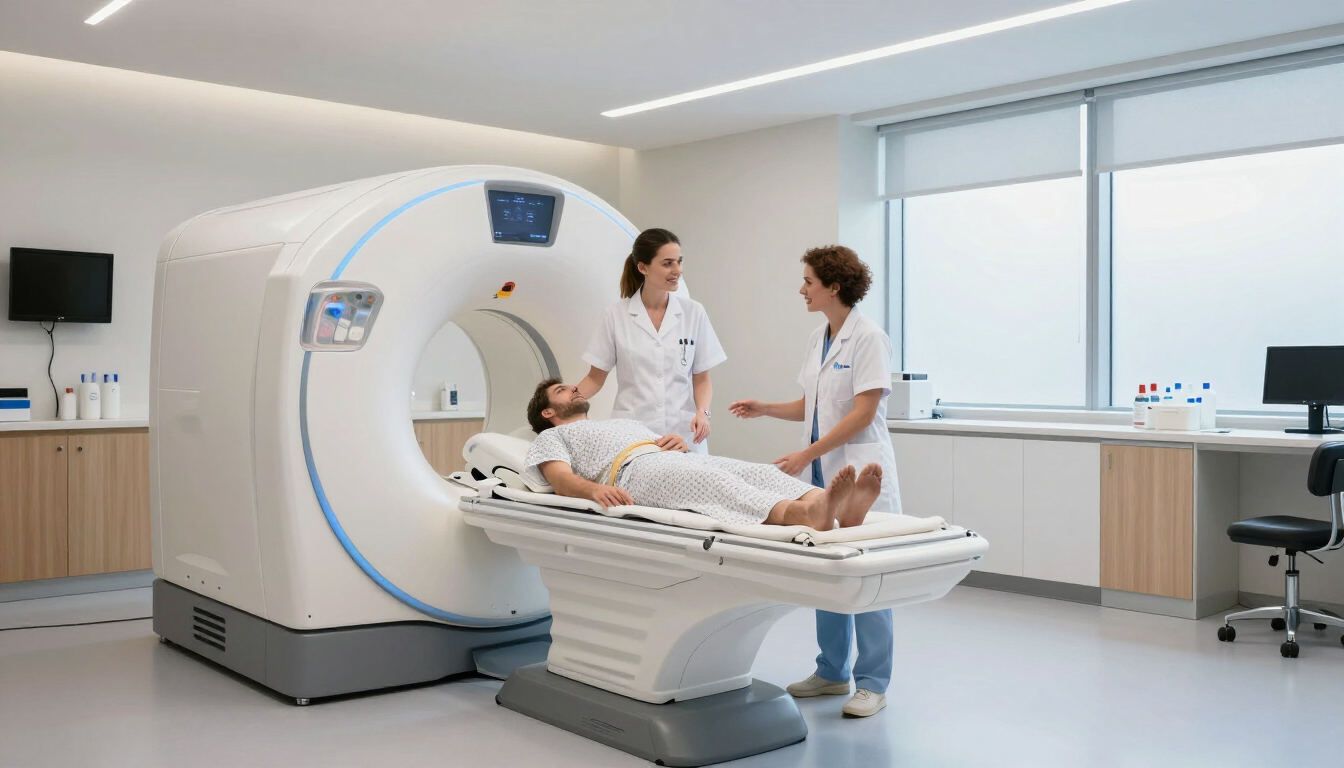
You will lie on your back while your knee is carefully positioned for the scan. The team will help you get comfortable before the MRI table moves into the scanner.
3. Loud MRI Sounds
MRI scanners make loud tapping, knocking and buzzing sounds while images are being taken. This is completely normal, and you will usually be given ear protection or headphones.
4. Stay Connected With the MRI Team
You are not left without contact during your scan. The radiographer can monitor and communicate with you throughout the examination, so you can let them know if you need assistance.
5. Keeping Your Knee Still
Staying still is essential for clear MRI images. If your knee is painful or uncomfortable, tell the team before the scan begins so they can help position you comfortably.
6. Is a Knee MRI Painful?
A knee MRI is generally painless and non-invasive. You will not feel the scanner taking images, although staying in one position may feel uncomfortable if your knee is already painful or swollen.
7. Worried About Claustrophobia?
If you feel anxious about enclosed spaces, tell the MRI team before your scan. They can explain the process and discuss ways to make your examination more comfortable.
8. How Long Does a Knee MRI Take?
A knee MRI typically takes around 10–30 minutes, depending on the images required. Allow additional time for safety checks and positioning before the scan.
9. What Happens After Your Knee MRI?
Once the scan is complete, you can normally get up and leave without a recovery period. Your images are reviewed by a radiologist, who prepares a report explaining the findings.
FAQ's :
Do you have to go all the way in for a knee MRI?
No. For a knee MRI, you usually do not need your whole body inside the scanner. The MRI is focused on your knee, so depending on the scanner design, your head may remain outside or close to the opening.
Is it worth getting an MRI for knee pain?
An MRI can be worthwhile if your knee pain is persistent, worsening, or associated with swelling, limited movement, or a suspected injury.
What should you not do before a knee MRI?
Before a knee MRI, avoid wearing metal objects or clothing with metal zips or buttons, and tell the MRI team about any implants or relevant medical history. MRI Plus advises wearing loose-fitting, metal-free clothing and removing metal items before the scan.
How long will a knee MRI scan take?
A knee MRI at MRI Plus typically takes around 20 - 40 minutes. The exact time can vary depending on the scan required and whether additional imaging is needed.